

Key Takeaways
- Put safety before photographs, insurance calls, or conversations about blame.
- Call 911 if anyone may be injured, traffic is blocked, or there is a fire, smoke, or another immediate danger.
- Get medical attention promptly, even when pain or other symptoms appear later.
- Collect photos, witness details, and notes only when it is safe to do so.
- Keep insurance communications factual and save every document connected to the crash.
- Do not accept a settlement until you understand what it covers and whether treatment is still needed.
A serious crash can turn an ordinary drive through Tega Cay, South Carolina, into a confusing and stressful event within seconds. Whether it happens near a neighborhood entrance, on a busier route toward Fort Mill, or on a rain-slick street near Lake Wylie, the top priorities are safety and medical care. A personal injury lawyer in Tega Cay, SC, may be a useful resource when injuries, insurance disputes, or unanswered questions complicate recovery. This checklist is designed to help Tega Cay, SC drivers and passengers respond calmly after a serious collision. It is not about arguing fault at the roadside. It is about protecting people, preserving accurate information, and creating a clear record for the days ahead.
Why the First Few Hours Matter in Tega Cay Accidents
Adrenaline, shock, and concern for other people can make even straightforward details hard to remember. A few careful actions early on can help preserve information about the crash, support medical follow-up, and reduce confusion during the insurance process. The goal is not to investigate the collision by yourself. It is to focus on safety, facts, and organized records. When a crash involves substantial injuries, disputed responsibility, multiple vehicles, or an insurer that is already pushing for quick answers, speaking with a Tega Cay car accident lawyer can help a person better understand the questions they are being asked and the records they should keep.
Step One: Move Away From Immediate Danger
- Check yourself and others for urgent injuries.
- Call 911 if someone is hurt, vehicles are blocking traffic, or conditions are unsafe.
- Turn on hazard lights and move away from active traffic lanes if you can do so safely.
- Move a vehicle only when it can be driven safely, and doing so will not interfere with emergency responders or law enforcement instructions.
- Do not move an injured person unless leaving them where they are creates a greater immediate danger.
Follow directions from police officers, firefighters, and emergency medical personnel. South Carolina’s public driving guidance also explains that drivers should make a reasonable effort to move a safely operable vehicle out of traffic after a damage-only collision, while calling 911 to report a collision when needed.
Step Two: Get Medical Attention
Not every injury is obvious at the scene. Headaches, neck pain, dizziness, numbness, back pain, sleep problems, and limited movement can appear hours or days later. Seek prompt medical evaluation if symptoms develop or worsen, and tell the provider when the crash occurred and when each symptom started. Follow recommended treatment and attend follow-up appointments. A simple daily log can also be helpful. Note pain levels, sleep disruption, missed work, medications, and activities that have become harder, such as driving, lifting, walking, or caring for children.
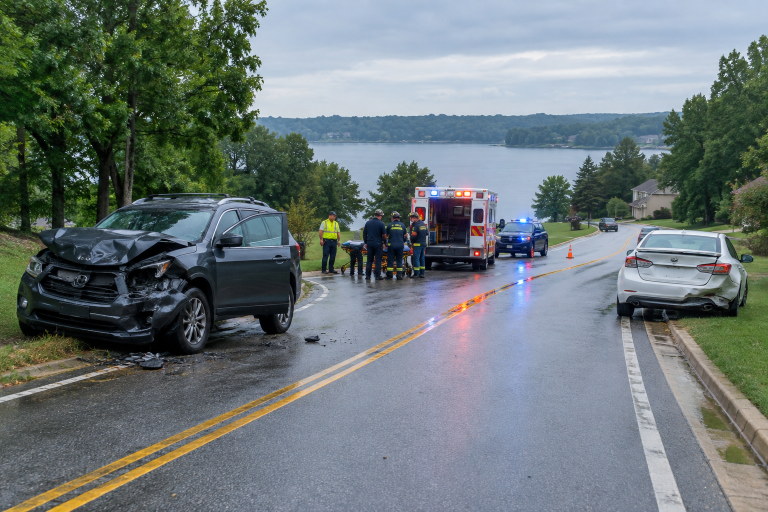
Step Three: Document the Scene Safely
Once everyone is out of immediate danger, photos and notes can preserve details that may disappear quickly. Tega Cay weather can change fast, and rain, fading light, standing water, or heavy traffic can alter the appearance of a roadway soon after a collision. Do not take pictures from a dangerous location or delay emergency care to gather evidence.
Useful Photos and Videos
- Damage to every vehicle from several angles.
- License plates, vehicle positions, and nearby landmarks.
- Traffic signals, signs, lane markings, intersections, and road conditions.
- Debris, broken glass, skid marks, and visible obstructions.
- Lighting, weather, and wet or damaged pavement.
- Visible injuries, if doing so does not interfere with treatment.
Details to Write Down
- The date, time, and exact location of the crash.
- Each vehicle’s direction of travel and lane position.
- Witness names and contact information.
- The responding agency, officer name, and report number.
- Towing company, repair facility, and medical provider information.
Step Four: Report the Crash and Request Records
A police report may preserve basic facts, including the parties involved, vehicle information, location, and the responding officer’s observations. Ask how to obtain the report and keep the report number with your insurance information. The South Carolina Department of Motor Vehicles explains how people involved in a collision can request a copy of the collision report online, in person, or by mail when an official report is available.
Step Five: Exchange Information Without Arguing About Fault
Exchange names, contact details, driver’s license information, insurance information, vehicle descriptions, and license plate numbers. If witnesses are willing, collect their names and phone numbers. Stay polite and factual. Avoid guessing about speed, apologizing for facts you do not know, or debating who caused the collision.
Step Six: Handle the Insurance Call Carefully
Report the crash in accordance with your policy requirements. Give basic facts about the date, location, vehicles, and known injuries. Ask for the claim number and the adjuster’s contact information, then keep notes of calls, emails, letters, and document requests. Read any release or settlement paperwork closely. A quick payment may not cover ongoing medical care, lost income, vehicle damage, or long-term limitations.
Build a Complete Recovery File
Keep one folder, binder, or secure digital file for all crash-related records. Include police reports, photographs, videos, dashcam files, medical records and bills, pharmacy receipts, towing and repair invoices, pay stubs, employer notes, insurance letters, claim forms, settlement offers, and witness information. Organized records can make it easier to answer questions accurately later.
Common Mistakes That Can Create Problems
- Leaving without following applicable reporting requirements.
- Skipping medical care because symptoms seem minor at first.
- Posting crash details, photos, or injury updates on social media.
- Giving a recorded statement before reviewing the facts and available records.
- Repairing, selling, or disposing of damaged property before documenting it.
- Failing to track missed work and out-of-pocket expenses.
- Ignoring insurer correspondence or accepting a settlement too soon.
When Extra Guidance May Be Helpful
Additional guidance can be especially useful when injuries require surgery, rehabilitation, or continuing care; fault is disputed; several vehicles or insurance policies are involved; a commercial vehicle, rideshare, motorcycle, bicyclist, or pedestrian is involved; the other driver may be uninsured; or a family has lost a loved one in the collision.
Questions Tega Cay Drivers Often Ask
Should I Call the Police After a Minor Crash in Tega Cay?
The right step can depend on injuries, property damage, blocked traffic, disputed facts, and reporting rules. If you are unsure, contact law enforcement and ask what steps apply to the situation.
What If Pain Starts the Next Day?
Seek medical attention promptly and explain when the symptoms began. New or worsening symptoms should not be ignored simply because they were not obvious at the crash scene.
How Long Should I Keep Crash Records?
Keep them until medical treatment, repairs, insurance claims, and any related disputes are fully resolved. Do not discard records just because the vehicle has been repaired or an initial claim payment has been made.
Follow a Calm, Practical Plan After a Tega Cay Accident
A serious car accident can make simple decisions feel difficult. A steady approach can help. Get to safety, call for help, seek appropriate medical care, preserve useful evidence, report the crash, and keep clear records. Those steps cannot undo what happened, but they can make the recovery process more manageable for Tega Cay families.
Conclusion
After a serious accident in Tega Cay, putting safety and medical care first can provide a clearer foundation for everything that follows. Once immediate dangers are addressed, carefully documenting the scene, reporting the collision, exchanging necessary information, and keeping medical, repair, employment, and insurance records organized can help preserve important details. Drivers should communicate factually with insurers and take time to understand settlement offers or other documents before signing them. When injuries are significant, responsibility is disputed, or the insurance process becomes complicated, seeking appropriate professional guidance can help clarify the available next steps. A calm, organized approach cannot change the accident, but it can make the recovery and claims process easier to manage.
