
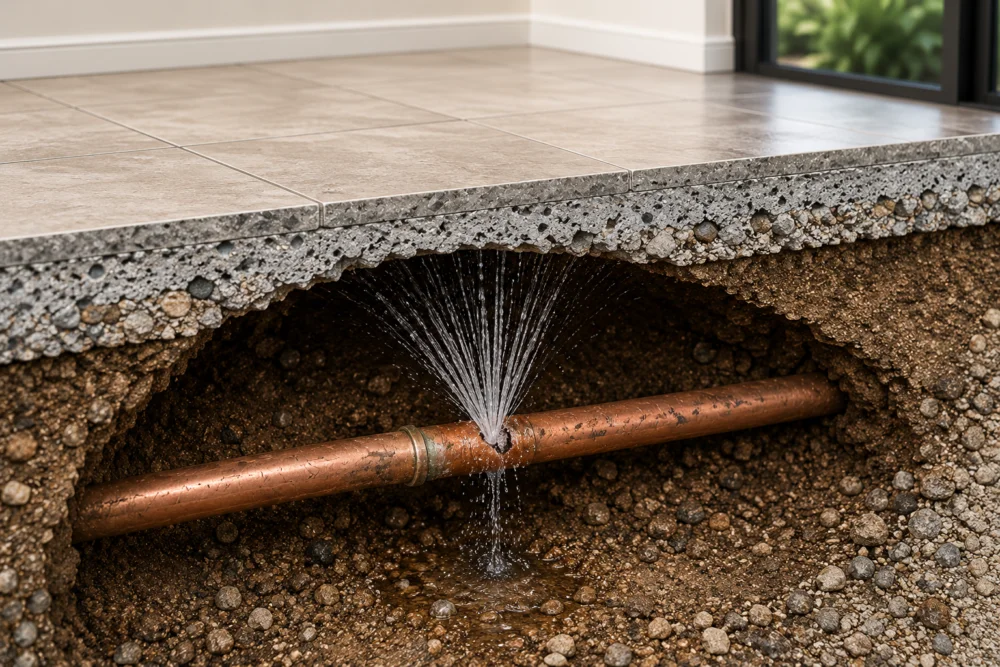
A warm patch on the flooring, a faint sound of water at night, or an unexplained increase in a utility bill can indicate a plumbing problem that is not immediately visible. Hidden leaks may occur beneath concrete slabs, behind walls, or under finished flooring, where water can travel before it leaves an obvious stain. Homeowners who notice several warning signs may benefit from prompt slab leak detection and repair in Arlington, TX, rather than waiting until surface damage becomes severe.
Not every warm floor or high water bill means there is a broken pipe beneath the home. A toilet flapper, irrigation line, appliance hose, or outdoor faucet can also waste water. Still, recognizing the clues early helps narrow down the cause and can reduce the chance of avoidable damage.
Why Hidden Leaks Are Hard To Spot
Water supply lines are often concealed inside walls, beneath floors, or below a concrete foundation. When a pressurized pipe develops a small opening, water may seep into surrounding soil or building materials for days or weeks before anyone sees a puddle. The first clue may be a musty odor, a meter that keeps moving, weak water pressure, or a section of floor that feels different from the rest of the room.
A visible fixture leak is usually easy to identify because water appears under a sink, near a toilet, or around an appliance. A concealed supply-line leak is different. For example, a homeowner may hear a soft hissing sound near a hallway floor late at night, even though every faucet is off and no cabinet or ceiling looks wet.
Early Warning Signs Around The Home
One symptom alone does not prove the location or source of a leak. However, several signs appearing together deserve attention.
- A sudden increase in water use without a change in household routines.
- Running, hissing, trickling, or rushing water sounds while fixtures are off.
- Warm, damp, soft, warped, or unusually uneven flooring.
- Reduced water pressure at multiple faucets or showers.
- Musty odors near baseboards, cabinets, or floors.
- Loose tile, new stains, cracked grout, or separated flooring materials.
- Wet soil, lush patches of grass, or unexplained pooling near the home.
How To Check For A Leak With Your Water Meter
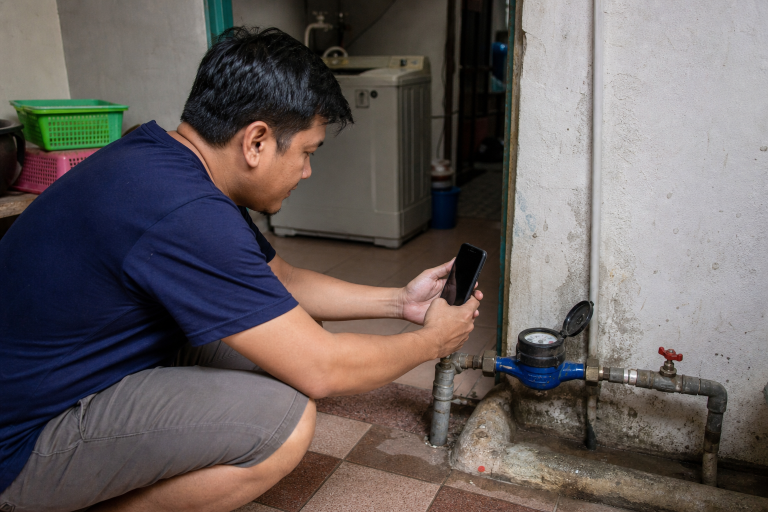
A water-meter check is a useful first screening step. It can show whether water is moving through the service line when the home should be using none, but it cannot reveal the exact location of the problem.
- Turn off faucets, showers, washing machines, dishwashers, ice makers, and irrigation systems.
- Make sure no one will use water during the test period.
- Record the meter reading or take a clear photo of it.
- Wait at least two hours, preferably longer if practical.
- Check the meter again. A changed reading or moving leak indicator suggests water use or water loss.
The average family can waste 180 gallons per week due to household leaks, making small, ongoing losses worth investigating even before damage becomes visible.
What A Warm Floor May Mean
An isolated warm spot can suggest that hot water is escaping from a line beneath or close to the floor surface. Heat may move through concrete, tile, wood, or vinyl, so the warmest location is not always directly above the pipe opening. Compare the area with nearby rooms and note whether the warmth continues after hot-water use has stopped.
Do not remove flooring or break concrete based on temperature alone. Heated flooring systems, nearby appliances, sun exposure, and ducts can also change floor temperature. A careful diagnosis helps prevent unnecessary demolition.
How Hidden Water Can Damage A Home
Uncontrolled water can affect more than a monthly bill. Depending on the location, duration, and volume of the leak, moisture may lead to:
- Higher water and sewer charges.
- Wet insulation, damaged cabinets, and warped flooring.
- Conditions that support musty odors and mold growth.
- Staining, cracking, or separation in finished materials.
- Soil movement below a slab foundation in some situations.
Not every crack is caused by plumbing, and not every hidden leak causes structural damage. The practical concern is that delayed action can allow moisture to spread, making both diagnosis and restoration more complicated.
Safe First Steps For Homeowners
- Limit water use until the source is clearer.
- Shut off the main water supply if water loss appears significant.
- Move rugs, furniture, boxes, and valuables away from damp areas.
- Document meter readings, stains, sounds, and changes in pressure.
- Avoid drilling, cutting walls, or breaking concrete without confirmation.
- Contact a qualified plumbing professional when the leak cannot be isolated.
Use extra caution around standing water, electrical outlets, extension cords, appliances, and slippery floors. If water reaches electrical equipment or creates an immediate safety risk, keep clear of the area and seek emergency help as appropriate.
How Professionals Locate Hidden Leaks
Leak detection commonly starts with a review of symptoms, visible plumbing, shutoff valves, and water usage. Depending on the home and suspected pipe location, a technician may use pressure testing, acoustic listening equipment, moisture readings, infrared tools, or electronic line tracing. Each method has limits because sound, moisture, and heat can travel away from the actual opening.
Recent reporting on warm floors, rising water bills, and running water sounds illustrates why multiple clues should be considered together instead of treating any one symptom as proof.
Common Repair Options
Localized Repair
A targeted repair may suit a single damaged section in an otherwise reliable line. Access can still require limited removal of flooring, wall materials, or concrete.
Pipe Rerouting
Rerouting creates a new path for water when an under-floor line is difficult to access or has become unreliable. The route should be planned carefully to protect the home’s layout and allow future servicing.
Partial Or Full Repiping
Repeated failures in several locations can indicate broader pipe deterioration. Replacing more of the system may sometimes be more practical than repeatedly repairing isolated failures, though it is not the right approach for every home.
Drying And Restoration
Stopping the leak is only part of the job. Wet drywall, insulation, flooring, cabinets, or other materials may need drying, cleaning, monitoring, repair, or replacement.
Questions To Ask Before Work Begins
- How was the leak located, and what evidence supports the repair area?
- Does the issue appear isolated or part of a broader pattern?
- What access will be required, and which finishes may be affected?
- How will the repaired line be tested before the area is closed?
- Who is responsible for drying and restoring damaged surfaces?
- Which permits, warranties, and possible added costs apply?
A Simple Leak Prevention Plan
- Review water bills for unexplained monthly changes.
- Check the meter during a period when no water is in use.
- Inspect visible supply lines, hoses, valves, and appliance connections.
- Test toilets periodically for silent leaks with food coloring.
- Consider whole-home flow monitoring or moisture sensors.
- Keep records of past leaks, repairs, and changes in water pressure.
Final Thoughts
Hidden plumbing leaks often start with subtle signals. A warm floor, a moving water meter, a new odor, an unexplained increase in the bill, or a pressure drop deserves a timely check. Early action can reduce water waste, protect finished surfaces, and give homeowners clearer repair options before a small moisture issue grows into a larger maintenance problem.
