
Key Takeaways:
- Understanding CEQA exemptions can significantly streamline project approvals.
- Recent legislative changes have expanded the scope of projects eligible for exemptions.
- Proper application of exemptions requires careful adherence to specific criteria.
Table of Contents:
- Introduction
- Understanding CEQA Exemptions
- Statutory Exemptions
- Categorical Exemptions
- Common Sense Exemption
- Recent Legislative Changes
- Practical Scenarios
- Conclusion
For developers and urban planners in California, mastering the California Environmental Quality Act (CEQA) is essential for successful project delivery. CEQA mandates that state and local government agencies must evaluate and disclose the environmental impacts of proposed projects before approval. While the intention is to safeguard the environment, the law also recognizes that not all activities necessitate extensive review. To that end, several projects may be eligible for exemptions, which can save valuable time and resources. Understanding when and how to apply statutory and categorical CEQA exemptions in California is a critical skill for anyone managing projects in the state.
CEQA exemptions are codified legal frameworks that allow certain projects to bypass rigorous environmental impact assessment. Knowing how these exemptions function and applying them correctly enables professionals to expedite approvals while maintaining legal compliance. By minimizing unnecessary delays, exemptions can bring much-needed housing, infrastructure, and public services online faster, benefiting both developers and communities.
The California Legislature and regulatory agencies periodically refine the list of qualifying activities. Keeping up to date with these changes ensures that planners and developers do not miss out on valuable opportunities for exemption. Conversely, misunderstanding or misapplying exemptions can lead to costly legal challenges, project delays, or risk of non-compliance.
Clear, thorough documentation is essential when utilizing CEQA exemptions. Agencies must demonstrate how a project meets the exemption criteria and verify that no exceptions apply. This due diligence can shield projects from legal opposition and smooth the path to groundbreaking. For a detailed overview of how CEQA interacts with other environmental laws, visit this comprehensive resource on CEQA reform from the Los Angeles Times.
Understanding CEQA Exemptions
Exemptions from CEQA can be divided into several categories: statutory exemptions, categorical exemptions, and the common sense exemption. These categories each serve a distinct purpose. Statutory exemptions apply to specific activities outlined by the legislature. Categorical exemptions are defined by the Secretary for Natural Resources and cover classes of projects with typically negligible impacts. The common sense exemption serves as a safeguard for activities that clearly could not affect the environment.
The existence of exemptions does not mean projects are free from all oversight. Agencies must perform careful analysis to confirm that an exemption applies and that no unique circumstances would trigger environmental concerns. Proper application can speed up approvals, but incorrect use can expose a project to litigation or resource bottlenecks later in the process.
Statutory Exemptions
Statutory exemptions are explicitly written into state law. Projects that fall under this category are exempt regardless of potential environmental impacts. Common examples include:
- Ministerial Projects: These involve the application of predictable, fixed standards with no discretionary input from decision-makers. Issuing a building permit for a code-compliant home illustrates this exemption well.
- Emergency Projects: Projects urgently addressing public safety or infrastructure repair in response to disasters such as wildfires, earthquakes, or floods are also routinely exempt.
Applying statutory exemptions requires careful documentation to ensure the project precisely matches the criteria laid out in the relevant statutes.
Categorical Exemptions
California’s Natural Resources Agency has established classes of activities that experience shows generally have no significant impact on the environment. Notable categorical exemptions include:
- Class 1 – Existing Facilities: Covers minor alterations or upgrades to existing structures without expanding capacity. Interior renovations or modernizing HVAC systems are classic examples.
- Class 32 – Infill Development Projects: Applies to infill projects smaller than five acres, surrounded by urban uses, consistent with local general plans and zoning regulations, and not located in environmentally sensitive areas.
Planners must ensure that the project does not fall under any exceptions, such as those involving sensitive habitats or cumulative environmental effects. Evidence must demonstrate the absence of unusual circumstances that could elevate impacts beyond what is typical for the class.
Common Sense Exemption
CEQA also includes a practical exemption for projects with no possibility of causing significant environmental harm. The “common sense” exemption is often applied to activities that are administrative or financial with no physical footprint, such as adopting internal policies or executing funding agreements unrelated to property improvement. To invoke this exemption, agencies must establish with certainty that the project cannot affect the environment in any foreseeable way.
Recent Legislative Changes
Major reforms in recent years have expanded CEQA exemptions, especially in response to California’s housing crisis. Assembly Bill 130 and Senate Bill 131, enacted in 2025, have introduced broad new exemptions for housing and essential infrastructure projects. For example, AB 130 provides a statutory exemption for infill housing developments that align with local plans and avoid sensitive resources. The aim is to accelerate project delivery by cutting back redundant or excessive environmental review for projects that meet strict eligibility rules.
These changes reflect California’s evolving approach to balancing environmental stewardship with urgent public needs such as affordable housing and public safety.
Practical Scenarios
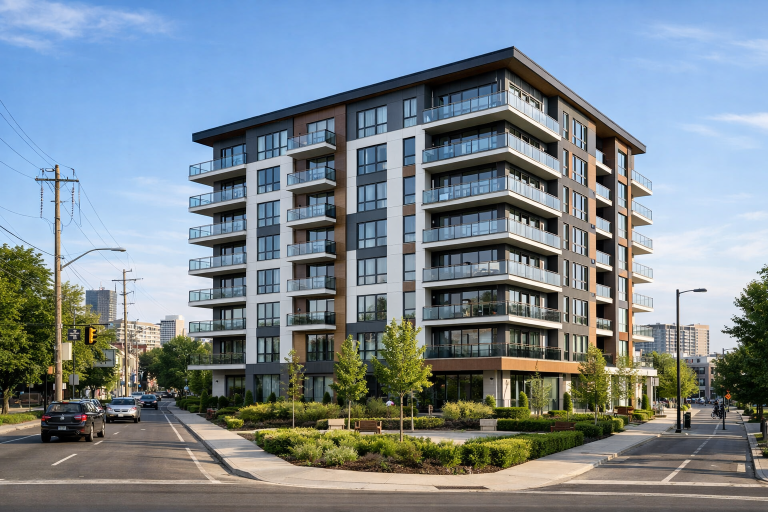
Consider a scenario in downtown Los Angeles where a developer plans to retrofit an older office building for residential use. If the work consists of interior changes only and does not expand the building, it would likely meet the Class 1 categorical exemption. Another example could be a four-acre vacant lot surrounded by existing homes in a city’s urban core. If proposed for new multifamily housing and it aligns with local zoning, the development could qualify under Class 32 for infill.
Despite these opportunities, developers and agencies must be diligent in proving eligibility. Opponents may attempt to challenge exemptions, citing arguments that the project does not strictly meet the criteria or involves exceptional circumstances. The best protection remains careful project documentation, public disclosure, and legal review at the outset. Agencies should always keep detailed records to demonstrate that no statutory or regulatory exceptions apply.
Conclusion
Mastering the criteria and documentation for CEQA exemptions is crucial for expediting development in California. The combination of statutory, categorical, and common sense exemptions, along with recent legislative expansions, offers a pathway to efficient project approvals. By keeping up to date with regulatory changes and rigorously applying exemption criteria, developers and agencies can achieve compliance while meeting community needs. Armed with a strategic understanding of CEQA’s exemptions, professionals are better equipped to navigate one of the most complex regulatory landscapes in the country.
